Chasing Light in the Desert: A Photographer’s Journey Through Swakopmund’s Wild Landscapes
Have you ever seen a place where the desert meets the ocean and feels like another planet? Swakopmund, nestled on Namibia’s surreal coastline, offers photographers an unmatched canvas of dunes, fog, and dramatic light. I was blown away by how nature paints here—endless golden sands, rugged cliffs, and skies that shift by the minute. This isn’t just travel; it’s visual storytelling at its rawest. The interplay of light and landscape creates moments so fleeting, so profound, that one cannot help but feel humbled. For those who carry a camera not just as a tool but as a voice, Swakopmund speaks in whispers and roars, in silence and motion, inviting a deeper connection with Earth’s untouched beauty.
Introduction to Swakopmund: Where the Desert Meets the Sea
Located along the western edge of Namibia, Swakopmund rests where the vast Namib Desert collides with the icy waters of the Atlantic Ocean. This coastal town, originally established during the late 19th century, has evolved into a gateway for adventurers and creatives drawn to its stark, otherworldly beauty. Unlike any other seaside destination, Swakopmund does not offer tropical warmth or turquoise waves. Instead, it presents a landscape shaped by time, wind, and elemental contrast—a place where sand dunes spill directly onto the shore, and ocean fog rolls inland like a slow-moving veil.
The climate here is defined by its duality. On one side, the Namib Desert stretches eastward as one of the oldest and driest deserts on Earth, with some areas receiving less than half an inch of rain per year. On the other, the cold Benguela Current sweeps up from the Antarctic, cooling the coastal air and generating persistent fog that sustains fragile ecosystems. This convergence of extreme aridity and marine moisture creates a visual and ecological paradox, making Swakopmund a rare natural phenomenon.
For photographers, this contrast is a gift. The town serves as a launchpad into landscapes that defy conventional expectations. Whether capturing the sharp lines of dunes against a storm-lit sky or the soft blur of fog creeping over tidal flats, Swakopmund offers textures, tones, and moods that shift with the hours. Its appeal lies not in comfort but in authenticity—a place where nature remains unpolished, unfiltered, and deeply expressive.
The Magic of Light: Golden Hours and Coastal Fog
In photography, light is not merely illumination—it is emotion, dimension, and narrative. Nowhere is this more evident than in Swakopmund, where the quality of light changes rapidly and dramatically. The golden hours—just after sunrise and before sunset—transform the desert into a living canvas. During these windows, the low-angle sun casts long shadows across the dunes, emphasizing their curves, ridges, and textures. The sand glows in warm hues of amber, copper, and rose, creating a dynamic interplay between light and form that rewards patient observation.
What sets Swakopmund apart is not just the brilliance of daylight but the subtlety of its absence. The marine fog that frequently blankets the coast during mornings and evenings introduces a completely different aesthetic. This fog, born from the collision of cold ocean currents and warm desert air, moves like a living mist across the landscape. It softens edges, diffuses light, and adds a haunting, almost dreamlike quality to images. Photographers who embrace this condition can capture ethereal scenes—dunes emerging from mist like ghostly waves, or lone figures silhouetted against a sea of gray.
To make the most of these conditions, timing and preparation are essential. Arriving at key locations at least 45 minutes before sunrise allows for setup in near-darkness, ensuring readiness when the first light breaks. Using a tripod is critical during low-light periods, especially when shooting long exposures to capture the motion of fog or waves. Neutral density filters can also help balance exposure in high-contrast scenes, such as when the sun peeks through fog banks. The goal is not to control the light but to anticipate it, respond to it, and let it guide the composition.
Many visitors are surprised by how quickly conditions change. A clear morning can give way to dense fog within minutes, and a foggy dawn may burn off to reveal a sky ablaze with color. This unpredictability demands flexibility. Rather than chasing a single ideal shot, successful photographers in Swakopmund learn to adapt, finding beauty in both clarity and obscurity. The lesson here extends beyond technique: it is about presence, about being fully engaged with the moment as it unfolds.
Dunes and Desert Patterns: Nature’s Abstract Art
The dunes surrounding Swakopmund are more than geological formations—they are works of art sculpted by wind over millennia. Found primarily in the Namib-Naukluft Park and along the Diamond Coast, these dunes display a variety of shapes, from crescent barchans to towering star dunes. Their surfaces ripple with intricate patterns, each groove and ridge a record of wind direction and sand flow. To photograph them is to engage with one of nature’s most refined abstract expressions.
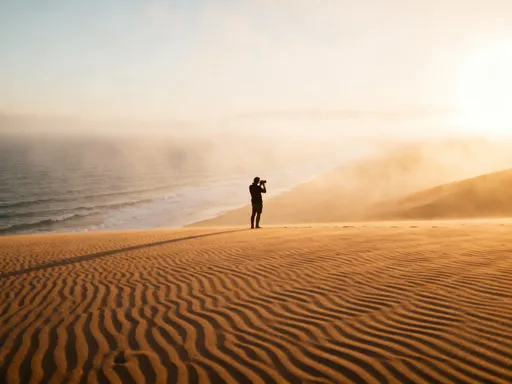
Shooting dunes effectively requires a shift in perspective. From ground level, the scale can be disorienting—endless slopes with no clear reference points. To convey depth and dimension, photographers often use leading lines, such as the curve of a dune’s edge or the trail of footsteps in the sand, to guide the viewer’s eye. Including a human figure, even as a small silhouette, can provide crucial scale, emphasizing the vastness of the landscape. A wide-angle lens is particularly effective in capturing the full sweep of a dune field, while a telephoto lens can isolate repeating patterns, turning sand ripples into mesmerizing textures.
Light plays a defining role in dune photography. Side lighting, common during early morning and late afternoon, enhances the three-dimensionality of the dunes by casting deep shadows in their troughs. This contrast brings out the sculptural quality of the sand, making the dunes appear almost liquid in their movement. On overcast days, the diffused light reduces contrast and creates a more subdued, minimalist look—ideal for emphasizing form over drama.
One of the most compelling aspects of dune photography is the element of transience. Wind reshapes the dunes constantly, meaning no two visits yield the same scene. A ridge that appears sharp and defined one day may be smoothed over the next. This impermanence adds emotional weight to the images—a reminder that what we capture is not just a place, but a moment in an ongoing process. For photographers, this fosters a deeper appreciation for timing, patience, and the quiet beauty of change.
The Atlantic Shoreline: Rugged Coastlines and Abandoned Structures
The meeting of desert and sea along Swakopmund’s coastline produces some of the most compelling photographic subjects in southern Africa. Here, the ocean does not gently kiss the shore; it crashes against rocky outcrops and stretches of coarse sand, sending plumes of spray into the air. The shoreline is raw and untamed, marked by tidal pools, scattered driftwood, and the skeletal remains of old shipwrecks—silent witnesses to the power of nature.
These shipwrecks, partially buried in sand and corroded by salt, offer haunting focal points. Their twisted metal frames and broken hulls stand in stark contrast to the soft curves of the dunes, creating a powerful juxtaposition between human ambition and natural endurance. While specific vessel names are not emphasized to avoid promoting unsafe exploration, their presence serves as a metaphor for time’s passage and the inevitability of decay. Photographing them requires care—approaching from stable ground, avoiding unstable structures, and respecting local guidelines.
Tidal pools along the rocky sections of the coast provide another rich source of imagery. Filled with seawater and home to small crustaceans, algae, and anemones, these natural basins reflect the sky and surrounding terrain like mirrors. A macro lens can reveal the intricate life within, while a wider shot can frame the pools within the larger context of the coastline. The interplay of water, rock, and light creates constantly shifting reflections, offering endless compositional possibilities.
One of the most rewarding challenges is combining desert and sea elements within a single frame. A composition that includes both dunes and waves, fog and sunlight, sand and foam, tells a more complete story of Swakopmund’s duality. Achieving this often means positioning oneself at the edge of the dune field where it meets the beach, using a mid-range aperture to maintain depth of field, and waiting for the right moment—when a wave recedes just as the sun breaks through fog. These moments are fleeting, but when captured, they resonate with a sense of balance and contrast that defines the region.
Flora and Fauna: Life in Extreme Conditions
Despite its harsh environment, Swakopmund and its surrounding desert support a surprising variety of life. Adapted to extreme heat, minimal water, and relentless wind, the region’s flora and fauna have evolved remarkable survival strategies. For photographers, these organisms offer intimate, often overlooked subjects that add depth and narrative to a visual journey.
One of the most iconic desert plants is the !Nara melon, a hardy vine that thrives in the sand dunes. Its large, spiky fruit provides vital moisture and nutrition for both wildlife and local communities. The plant’s sprawling network of leaves and vines creates interesting textures and patterns, especially when backlit by morning sun. Lichens, too, cling to rocks along the coast, their gray-green patches a testament to resilience in nutrient-poor environments. These small details, often missed by casual observers, become compelling macro subjects when photographed with care.
Wildlife in the area is sparse but fascinating. The fog-basking beetle, a small insect native to the Namib, performs a daily ritual to collect moisture—standing on its head on dune crests to let fog condense on its shell and trickle into its mouth. Capturing this behavior requires patience and a macro lens, but the resulting images are both scientifically intriguing and visually poetic. Coastal birds, such as the African oystercatcher and the kelp gull, forage along the shoreline, their movements providing dynamic elements in beach compositions.
When photographing wildlife, ethical considerations are paramount. Observers should maintain a respectful distance, avoid sudden movements, and never interfere with natural behaviors. Using a telephoto lens allows for close-up shots without intrusion. The goal is not to dominate the scene but to witness it—to document life as it exists, not as we wish it to be. In doing so, photographers contribute to a greater understanding of these fragile ecosystems, fostering appreciation without exploitation.
Practical Photography Tips for Shooting in Swakopmund
Photographing in Swakopmund demands both technical preparedness and environmental awareness. The combination of fine sand, salty air, strong winds, and temperature fluctuations poses unique challenges that can affect both equipment and comfort. A well-planned approach ensures not only better images but also a safer, more enjoyable experience.
Gear protection is critical. Sand can infiltrate camera bodies, lenses, and bags with surprising ease. Using weather-sealed equipment, when available, provides an added layer of defense. Carrying a microfiber cloth, a blower brush, and silica gel packs helps keep lenses and sensors clean and dry. Some photographers use rain covers or even Ziploc bags as improvised shields during particularly windy or foggy conditions. It is also wise to change lenses sparingly and only in sheltered areas to minimize dust exposure.
Lens selection should reflect the diversity of subjects. A wide-angle lens (16–35mm) is ideal for expansive dune landscapes and coastal vistas. A standard zoom (24–70mm) offers versatility for mid-range compositions, while a telephoto lens (70–200mm or longer) enables detailed shots of wildlife, distant shipwrecks, or compressed dune patterns. A macro lens (100mm) is invaluable for capturing small-scale textures and desert life. Filters, particularly polarizers and neutral density filters, enhance control over reflections and exposure in high-contrast scenes.
Physical preparation is equally important. The desert can be deceptively cold in the morning and intensely hot by midday. Layered clothing allows for easy adjustment, while a wide-brimmed hat, sunglasses, and sunscreen protect against UV exposure. Sturdy, closed-toe shoes are essential for walking on sharp rocks and loose sand. Hydration is crucial—carrying ample water, even for short outings, prevents fatigue and heat-related issues.
Planning routes in advance ensures access to key locations while respecting protected areas. Some dune fields and coastal zones require permits or guided access to minimize environmental impact. Local tour operators and visitor centers can provide up-to-date information on regulations and safety guidelines. GPS devices or offline maps help prevent disorientation, especially in featureless desert terrain. Ultimately, preparation is not just about logistics—it is about showing respect for a landscape that tolerates human presence but does not depend on it.
Beyond the Lens: Preserving the Landscape Through Images
Every photograph taken in Swakopmund carries a responsibility. The very qualities that make this place so visually compelling—its isolation, fragility, and raw beauty—are also what make it vulnerable. As more travelers are drawn to its unique scenery, the risk of environmental degradation increases. Footprints in sensitive dune areas, litter left behind, and disturbance to wildlife can have lasting effects on an ecosystem that recovers slowly, if at all.
Photographers, by virtue of their influence, have a unique role in conservation. A single powerful image can inspire awareness, spark dialogue, and even drive policy change. Images of fog drifting over silent dunes, of beetles harvesting moisture, or of the sea reclaiming a rusted hull can communicate the value of preservation more effectively than words alone. When shared with context and intention, photographs become tools for education and advocacy.
Responsible photography begins with mindfulness. Staying on designated paths, avoiding off-road driving, and never removing natural materials are simple but vital practices. Photographers should also avoid baiting or approaching wildlife too closely, even for the sake of a better shot. The integrity of the image should not come at the expense of the subject. Furthermore, crediting local guides, supporting eco-conscious tour operators, and sharing sustainable practices with audiences amplify the positive impact of one’s work.
Ultimately, the goal is not just to capture beauty but to honor it. Swakopmund is not a backdrop; it is a living system, a dynamic interplay of forces that has existed long before cameras and will endure long after. By photographing with humility and care, artists contribute to a legacy of respect—one that values preservation as much as aesthetics.
Conclusion: Why Swakopmund Belongs on Every Photographer’s List
Swakopmund is not a destination for those seeking convenience or predictability. It is for those who seek truth in nature—who are willing to rise before dawn, walk through sand, and wait in silence for the light to align. Its landscapes are not curated; they are wild, untamed, and deeply expressive. From the whisper of fog over dunes to the crash of waves against desert shores, every element tells a story of resilience, contrast, and quiet majesty.
What makes Swakopmund truly exceptional is its visual diversity. Within a single day, a photographer can capture high-contrast desertscapes, soft coastal mists, intricate macro details, and expansive seascapes. The emotional impact of these images often lingers long after the return home—a sense of awe, of connection, of having witnessed something rare and fleeting.
For 30- to 55-year-old women who cherish meaningful travel, Swakopmund offers more than scenic views. It offers a chance to slow down, to observe, and to create with intention. It invites a reconnection with nature not as a spectator, but as a storyteller. With every shutter click, there is an opportunity to preserve a moment, to share a vision, and to inspire others to see the world with fresh eyes.
So pack your camera, your layers, and your sense of wonder. Visit Swakopmund not as a tourist, but as a witness to one of Earth’s most extraordinary landscapes. Let your images reflect not just what you saw, but what you felt. In a world that often moves too fast, this desert coast reminds us to pause, to breathe, and to chase the light—with respect, with purpose, and with heart.