This Is How Culture Comes Alive in Port Vila’s Markets
You know that feeling when you step into a market and suddenly, you’re not just shopping—you’re connecting? That’s Port Vila. In Vanuatu’s capital, every woven bag, carved tiki, and hand-stamped fabric tells a story older than words. I didn’t just buy souvenirs here—I took home pieces of living culture. What makes these crafts so special isn’t just how they look, but why they exist. Let me show you the soul behind the stalls. This is more than a marketplace; it’s a living gallery of tradition, resilience, and identity. Here, culture isn’t performed for tourists—it unfolds naturally, woven into the rhythm of daily life.
First Impressions: Walking into Port Vila’s Vibrant Market Scene
As you approach the main market near Independence Park, the air shifts. The scent of ripe mangoes and grilled taro mingles with woodsmoke and sea salt. Brightly colored fabrics flutter like flags in the breeze, while pyramids of yams, pineapples, and breadfruit sit proudly on woven mats. Women in grass skirts and floral dresses call out greetings in Bislama, their voices warm and unhurried. Children dart between stalls, barefoot and laughing, pausing to inspect a basket or help fold a piece of tapa cloth.
The sounds are a gentle symphony—vendors bargaining in lilting tones, the rhythmic tap of a carving tool, the occasional strum of a ukulele from a nearby musician. There’s no rush, no pressure to buy. Instead, there’s an invitation: to look, to touch, to listen. This isn’t a commercial hub built for mass tourism. It’s where locals come to trade, socialize, and celebrate the rhythms of island life. Every interaction feels personal, every object rooted in purpose.
What strikes visitors most is the authenticity. There are no neon signs, no plastic trinkets from overseas factories. The goods on display are made by hand, often the night before or that very morning. The market isn’t just a place to shop—it’s a stage for cultural continuity. When you walk through it, you’re not observing a performance. You’re stepping into the everyday life of the Ni-Vanuatu people, where tradition and modernity coexist with quiet grace.
The Heartbeat of Ni-Vanuatu Culture: Craft as Identity
In Vanuatu, art is not separate from life—it is life. For generations, the people of these 83 islands have expressed their identity through craft. Each island, each village, has its own distinct patterns, symbols, and techniques, passed down orally and through practice. These traditions are not relics of the past but living expressions of who the Ni-Vanuatu are today. A carved wooden bowl is not merely functional; it carries the spirit of the ancestor who first shaped its form. A woven mat is not just for sitting—it may mark a rite of passage, a wedding, or a reconciliation.
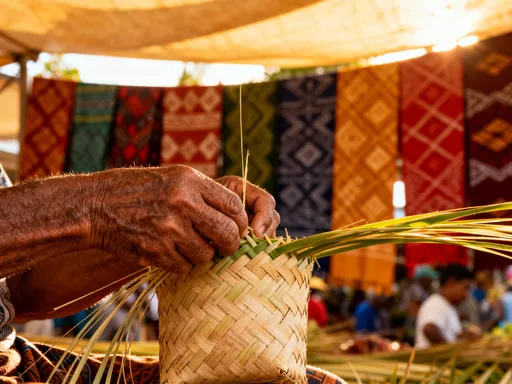
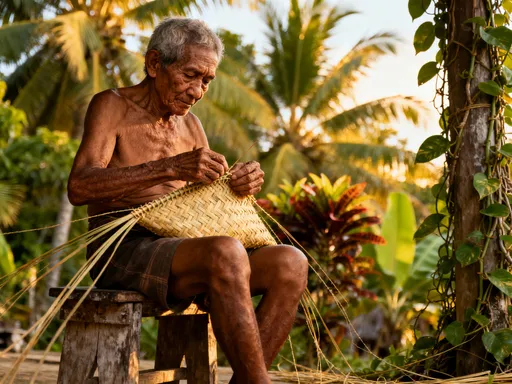
Craft in Vanuatu is deeply tied to *kastom*, a Bislama word that encompasses traditional customs, beliefs, and social structures. *Kastom* governs how people relate to one another, to the land, and to the spiritual world. When a woman weaves pandanus leaves into a basket, she is not only creating a useful object—she is honoring her ancestors, teaching her daughters, and maintaining a thread that stretches back centuries. These crafts are vessels of knowledge, holding stories, values, and ecological wisdom.
Supporting local artisans in Port Vila is not just about buying a beautiful object. It’s about participating in cultural preservation. Many young people are drawn to urban centers or overseas work, leaving fewer hands to carry on traditional practices. When travelers choose authentic handmade goods over imported imitations, they help sustain livelihoods and ensure that skills like bark cloth making or mask carving don’t fade into memory. Every purchase becomes a quiet act of respect and solidarity.
Must-See Handicrafts: What to Look For (And Why It Matters)
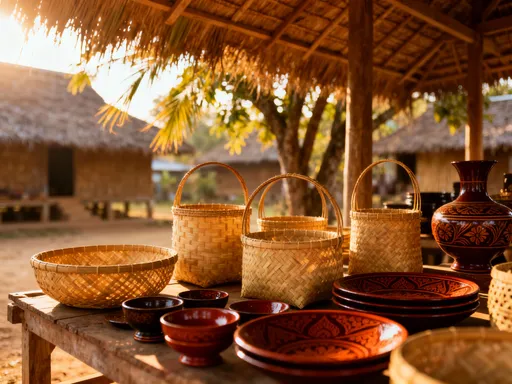
Among the most iconic items in Port Vila’s markets are the woven *nakamals*—baskets made from coconut palm leaves. These are not just decorative; they are used in daily life for carrying food, gifts, or ceremonial offerings. Each region has its own weaving style, from tight geometric patterns in Shefa Province to looser, flowing designs in Tafea. The skill required is immense: a single basket can take days to complete, with each leaf carefully split, dried, and woven by hand.
Another treasure is the *kastom* mask, often carved from breadfruit or mango wood. These masks are not made for display alone. In traditional ceremonies, they represent ancestral spirits or clan totems, used in dances that mark harvests, initiations, or healing rituals. The symbols carved into the masks—spirals, eyes, waves—carry deep meaning, often known only to those within the community. While some masks are now made for sale, many artisans still adhere to spiritual protocols, ensuring they are not created or worn disrespectfully.
Tapa cloth, known locally as *masi*, is another must-see. Made from the inner bark of the paper mulberry tree, it is beaten into large sheets and decorated with natural dyes. Designs often depict ocean waves, turtle shells, or clan symbols. The process is labor-intensive and requires deep knowledge of plant preparation and dye chemistry. Unlike printed fabrics, each piece of tapa is unique, bearing the marks of its maker’s hands. When you buy tapa, you’re not just acquiring art—you’re holding a piece of living heritage.
It’s important to distinguish authentic crafts from mass-produced imports. Many tourist shops sell wooden carvings or fabrics made overseas, often labeled deceptively as “local.” True handmade items may have slight imperfections—uneven stitching, natural color variations—which are signs of authenticity. Ask vendors about the origin of the piece. If they can tell you which island it’s from, who made it, or what the symbols mean, you’re likely holding something genuine.
From Forest to Fabric: How Traditional Materials Are Sourced
The beauty of Ni-Vanuatu crafts lies not only in their design but in their connection to the natural world. Materials are gathered sustainably, following practices that have protected Vanuatu’s ecosystems for generations. Coconut fibers, pandanus leaves, and bamboo are harvested in ways that allow regrowth, ensuring future generations can continue the traditions. There is no concept of “disposable” here—every part of a plant is used, from leaf to root.
Tapa cloth production is a perfect example of this deep ecological wisdom. The paper mulberry tree is cultivated in small family plots. Once the bark is stripped, it is soaked in seawater, then pounded with wooden mallets until it becomes a flexible sheet. Natural dyes come from sources like mangrove mud (which produces deep black), turmeric root (bright yellow), and crushed leaves (for greens and browns). These dyes are fixed using traditional methods, often involving fermentation or sun exposure, without harmful chemicals.
The use of natural materials is not just practical—it’s spiritual. Many artisans believe the land and sea are alive with ancestral presence. Harvesting is done with gratitude, often accompanied by small offerings or prayers. This reverence ensures that resources are not exploited but honored. In a world grappling with environmental degradation, Vanuatu’s approach offers a powerful model of sustainable living, where craft and conservation go hand in hand.
Travelers can support this balance by choosing products made with traditional methods. Avoid items that use synthetic dyes, plastic fibers, or imported wood. Look for signs of handwork: the texture of woven fibers, the variation in dye absorption, the weight of solid wood carvings. When in doubt, ask. Most artisans are proud to explain their process and happy to share their knowledge with respectful visitors.
Meet the Makers: Stories Behind the Stalls
Behind every basket, mask, and piece of tapa is a person with a story. Take Mama Lusi, a weaver from Efate Island who has been crafting pandanus mats since she was ten. She learned from her grandmother, who learned from hers. Now in her sixties, she teaches her granddaughters every evening after school. “This is not just work,” she says, her hands moving swiftly over the leaves. “It is memory. If we stop, a part of us disappears.”
Or consider John from Tanna, a carver known for his intricate *kastom* masks. He uses only wood from fallen trees, never cutting a living one. Each mask takes weeks to complete, with every curve and symbol chosen deliberately. “When I carve, I listen,” he explains. “The wood tells me what it wants to become.” His pieces are not sold in large tourist shops but at the Saturday market, where he meets travelers face to face, sharing the meaning behind his work.
Then there’s Sela, a young woman from Ambae who moved to Port Vila after her island’s volcanic eruption. She now makes tapa cloth using techniques from her homeland, adapting them with local materials. “I make these to remember,” she says. “But also to show that we are still here, still strong.” Her story is not unique—many artisans in the market are rebuilding lives shaped by climate change, migration, or economic hardship.
These conversations transform shopping into connection. When you buy from someone like Mama Lusi or John, you’re not just getting a product—you’re supporting a family, preserving a legacy, and becoming part of a story that spans generations. These artisans face real challenges: competition from cheap imports, limited access to markets, and the slow erosion of traditional knowledge. But their pride in their work is unwavering. They are not selling souvenirs—they are sharing their identity.
Where to Find Authentic Goods: Beyond the Main Market
While the central market in Port Vila is a wonderful starting point, deeper cultural experiences await beyond its stalls. Community-run craft centers, such as the Vanuatu Cultural Centre or the Ekasup Village near Mele, offer immersive opportunities to see artisans at work. Here, you can watch tapa being beaten, masks being carved, and dances being rehearsed—all in settings that honor tradition rather than cater to spectacle.
Ekasup, in particular, is a living cultural village where families from different islands demonstrate traditional skills daily. Visitors are welcomed as guests, not spectators. You might learn to weave a simple mat, taste *lap lap* (a steamed coconut and root vegetable dish), or hear stories told under a thatched roof. These centers ensure that artisans receive fair compensation and that cultural knowledge is shared accurately and respectfully.
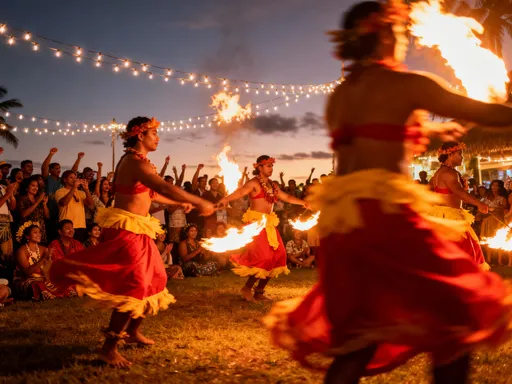
Timing your visit can also enhance your experience. During festivals like *Nakamal Day* or Independence Week (July), the markets come alive with special displays, music, and dance performances. These events are not staged for tourists—they are genuine celebrations of national and cultural pride. Attending them allows you to witness craft in its full context: not as isolated objects, but as part of a vibrant, ongoing tradition.
Be cautious of tourist traps, especially in hotel gift shops or roadside stalls near cruise ports. Some sellers pass off imported carvings from Indonesia or the Philippines as local work. Authentic pieces are rarely mass-produced. If a wooden tiki looks too perfect, too uniform, or too cheap, it likely is. Trust your instincts. When in doubt, buy directly from artisans at community centers or markets where they are known and respected.
Traveler’s Responsibility: How to Buy with Respect
Shopping in Port Vila’s markets is a privilege, not a transaction. Every choice you make has an impact. Paying fair prices—enough to support a family, not just a single item—ensures that craftsmanship remains a viable livelihood. Bargaining is common, but it should be done gently, with awareness that many vendors are selling not for profit but for survival. A smile, a thank you in Bislama (*gratias*), and a willingness to listen go further than any discount.
Respect extends beyond money. Always ask permission before photographing people or their crafts. Some designs are sacred or tied to specific clans, and their images should not be shared freely. If someone declines, accept it graciously. These are not just photo opportunities—they are people’s lives, their heritage, their dignity.
Slow tourism makes a difference. Instead of rushing from stall to stall, spend time. Sit with a weaver. Learn her name. Share a story. These moments of connection are what travel is truly about. When you take home a basket or a piece of tapa, you’re not just carrying an object—you’re carrying a relationship.
Remember: every purchase supports education, healthcare, and cultural preservation. When you choose authenticity, you help keep traditions alive. You become part of a chain that links past, present, and future. That’s the real value of what you buy—not the price, but the meaning.
Conclusion: More Than Souvenirs—Taking Home Meaning
Port Vila’s markets are not just places to shop. They are gateways to understanding. Here, culture is not frozen in museums or performed on stages. It lives in the hands of weavers, the voices of storytellers, the colors of hand-dyed cloth. When you walk through these markets, you’re not a tourist—you’re a guest in a living story.
The crafts you find here are more than souvenirs. They are invitations—to listen, to learn, to remember. Each basket, each mask, each piece of tapa carries the weight of history and the hope of continuity. They remind us that culture is not something we observe from afar. It is something we enter, with humility and heart.
So when you travel to Port Vila, go beyond the postcard views. Step into the market. Let the scents, sounds, and smiles guide you. Ask questions. Share gratitude. Choose authenticity. And when you return home, don’t just display your purchases—tell their stories. Let them spark conversations about resilience, respect, and the beauty of human creativity.
Travel mindfully. Carry not just memories, but meaning. Because in Port Vila, you don’t just find culture—you’re invited into it.