You Won’t Believe What I Found in Baguio—A View That Changed Everything
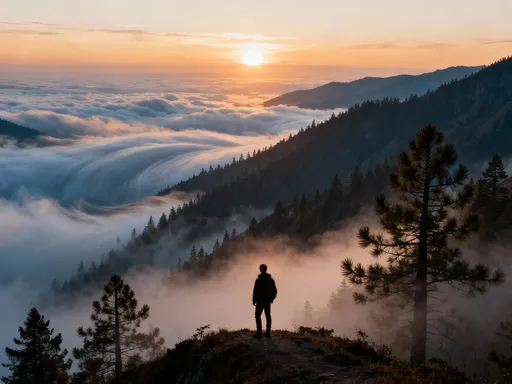
Baguio isn’t just a mountain getaway—it’s a sensory awakening. Nestled in the Philippine highlands, this city reveals itself in layers: mist curling over pine trees, sudden clearings with panoramic views, and that crisp, cool air you can’t find anywhere else. I came for the escape, but stayed for the moments when time paused—on a quiet ridge, at sunrise, watching clouds roll like waves over distant peaks. This is about discovery, not just of places, but of how a single view can shift your perspective. It’s about how elevation does more than lift you above sea level—it lifts you above the noise of daily life, offering clarity in silence and beauty in stillness. In a world that rarely slows down, Baguio reminds us what it means to truly see.
The First Glimpse: Arrival in Baguio
Entering Baguio is less like arriving at a destination and more like stepping into a different world. The transformation begins long before the city center appears. As vehicles climb the winding roads from the lowlands, the air gradually cools, shedding the humidity that clings to coastal cities. Windows are rolled down not for ventilation, but for sensation—the first breath of pine-scented mountain air is unmistakable, sharp and clean, carrying with it a quiet promise of renewal. The change is physical and emotional. Skin cools, breathing deepens, and the mind begins to unclench.
The journey itself becomes part of the experience. Along Kennon Road or Marcos Highway, roadside stalls display baskets of strawberries, cabbage, and carrots—harvests of the highland soil. Farmers in wide-brimmed hats stand beside their produce, their faces weathered by sun and wind, a testament to the region’s agricultural roots. As elevation increases, fog rolls in like a slow tide, wrapping around bends in the road. Trees grow denser, their branches thick with moss. The sound of traffic fades, replaced by the occasional chirp of highland birds and the rustle of leaves. This ascent is not just geographical—it’s psychological. With every turn upward, the weight of urban life feels a little lighter.
By the time the first sign for Baguio appears, travelers are already immersed in its atmosphere. There’s no abrupt arrival; instead, the city reveals itself in glimpses—rooftops peeking through the mist, clusters of pine trees lining the roadside, a sudden opening in the forest that offers a fleeting view of distant ridges. This gradual unveiling sets the tone for what’s to come: Baguio does not announce itself with fanfare. It invites you in quietly, asking only that you pay attention. And for those willing to do so, the rewards begin long before they check into a hotel or take their first photo. The real journey isn’t measured in kilometers, but in the shift from haste to presence.
Why Baguio? The Allure of Highland Escapes
Baguio’s reputation as a retreat is no accident. Situated at approximately 1,500 meters above sea level in the Cordillera Central mountain range, the city enjoys a temperate climate that stands in stark contrast to the tropical heat of most of the Philippines. Average temperatures hover between 15°C and 23°C (59°F to 73°F), creating an environment where light jackets are common and sweat is rare. This natural cooling effect is more than a comfort—it’s a physiological relief. Studies have shown that cooler temperatures can reduce stress levels, improve sleep quality, and enhance cognitive function. In a country where urban centers often feel overcrowded and overheated, Baguio offers a rare balance of accessibility and tranquility.
The city’s origins as a highland refuge date back to the American colonial period, when it was developed as a summer capital for government officials seeking relief from the lowland heat. Its elevation was not just a geographic detail but a strategic choice—one that recognized the restorative power of cooler air and open spaces. Today, that legacy endures. People travel for hours, sometimes days, not for luxury resorts or nightlife, but for the simple pleasure of breathing deeply and feeling the sun on their skin without breaking a sweat. The air here feels lighter, easier to inhale, as if the atmosphere itself is more generous.
But elevation does more than regulate temperature—it transforms perception. At higher altitudes, the air is clearer, less polluted, and often less humid, allowing for sharper visibility and more vivid sunrises and sunsets. Distant mountain ranges, which might appear hazy or indistinct at lower levels, come into crisp focus. This clarity extends beyond the physical. Many visitors report a mental shift—a sense of emotional lightness, a quieting of internal noise. There’s a reason so many cultures have built monasteries, retreats, and observatories in the mountains: height changes perspective. In Baguio, that change is available not just to monks or scientists, but to anyone willing to make the climb. The city’s appeal lies not in spectacle, but in its ability to restore balance—between body and mind, between movement and stillness, between the world we live in and the one we long for.
Viewpoint 1: Burnham Park – Where the City Opens Up
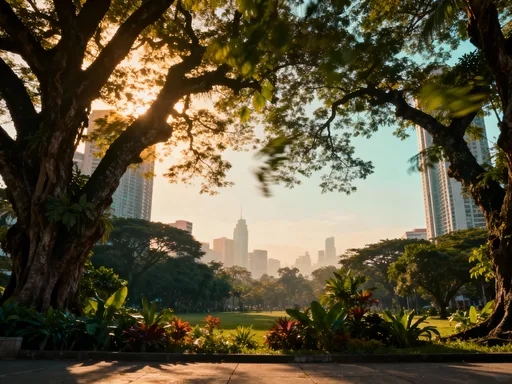
No introduction to Baguio is complete without a visit to Burnham Park, named after American architect Daniel Burnham, who envisioned the city as a planned mountain retreat. At its heart lies a serene man-made lake, surrounded by wide promenades, flower gardens, and clusters of pine trees. Unlike remote viewpoints that require long hikes or steep climbs, Burnham Park is accessible to everyone—families with strollers, elderly couples taking slow walks, and solo travelers seeking a quiet bench with a view. It serves as both a recreational space and a symbolic threshold, marking the transition from journey to arrival.
The park offers framed views of the surrounding hills, with gentle slopes rising in the distance. On clear mornings, sunlight spills over the ridges, casting long shadows across the grass. Couples paddle rowboats across the lake, their laughter carrying softly on the breeze. Children fly kites shaped like butterflies and stars, their strings stretching toward the sky. Local vendors sell warm camote cue (caramelized sweet potatoes) and cups of hot chocolate, adding to the comforting atmosphere. There’s a relaxed rhythm here, unhurried and inclusive, where the simple act of sitting by the water becomes a form of meditation.
For first-time visitors, Burnham Park is more than a scenic spot—it’s an emotional preview of what Baguio offers. It introduces the city’s blend of natural beauty and human warmth without demanding effort or expertise. You don’t need to hike, climb, or navigate rough terrain to feel its magic. Instead, the beauty unfolds at eye level, in the rustle of leaves, the ripple of water, and the shared silence between strangers enjoying the same view. It’s a reminder that not all profound experiences require adventure; sometimes, they simply require presence. By starting here, travelers ease into the rhythm of the highlands, preparing themselves for the more dramatic vistas ahead.
Viewpoint 2: Mines View Park – Postcard Perfection
If Burnham Park is Baguio’s gentle welcome, Mines View Park is its grand reveal. Perched on a high ridge along Asin Road, this iconic lookout delivers one of the most photographed views in the Philippines. From its elevated wooden platform, visitors gaze down into a vast valley blanketed in green, where layers of mountains recede into the horizon like waves frozen in time. On misty mornings, clouds drift through the valley, obscuring and revealing the landscape in slow motion. It’s a view that feels both immense and intimate, as if nature is performing just for those who have made the effort to stand at its edge.
The park’s name traces back to the American colonial era, when geologists surveyed the area for mineral deposits, particularly copper and gold. Though large-scale mining never fully developed, the name stuck, adding a quiet layer of history to the experience. Today, the only treasures extracted here are memories and photographs. Telescopes line the railing, allowing visitors to zoom in on distant peaks or track the movement of clouds. Local vendors sell hand-carved wooden souvenirs, warm blankets, and cups of ginger tea, enhancing the cozy alpine atmosphere. Families gather at the railings, pointing out landmarks, while couples lean into each other, wrapped in shared silence.
What makes Mines View Park so powerful is not just the scale of the vista, but its accessibility. A short drive from the city center brings travelers to this breathtaking panorama. Yet, despite the crowds, especially on weekends, there are moments—just after sunrise or before sunset—when the light turns golden and the noise fades, leaving only the whisper of wind through the pines. In those moments, the view transcends the postcard. It becomes a mirror, reflecting not just the landscape, but the quiet awe within the observer. It’s a reminder that beauty, even when expected, can still surprise us—especially when it arrives with the slow grace of morning light over the Cordillera.
Viewpoint 3: Tam-Awan Village – A Cultural Vista
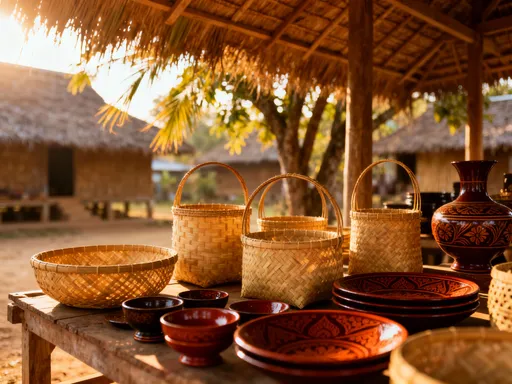
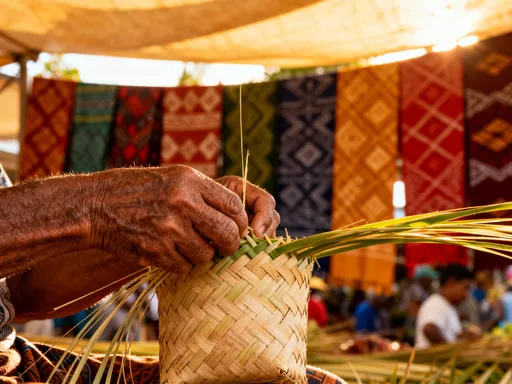
Nestled along the slopes of Asin Road, away from the main tourist circuits, Tam-Awan Village offers a different kind of elevation—one that lifts not just the body, but the spirit. This cultural village was established to preserve and celebrate the traditions of the indigenous Ifugao and Kalinga peoples, whose ancestral homes once dotted these highlands. Built using traditional architecture—nipa roofs, bamboo walls, and wood carvings—the village is both a living museum and a creative hub, where artists teach weaving, drumming, and dance to visitors and locals alike.
What sets Tam-Awan apart is its integration with the natural landscape. The structures are arranged to maximize views of the surrounding mountains, with open decks and seating areas facing west—perfect for sunset watching. As daylight fades, the sky transforms into a canvas of amber, rose, and lavender, painting the ridges in soft, shifting hues. The sound of native drums often drifts through the air, not as performance, but as practice—a steady, grounding rhythm that connects the present to ancient traditions. Guests are invited to sit, sip herbal tea, and simply be.
Here, the view is not just visual—it’s emotional and cultural. To stand on Tam-Awan’s deck is to witness beauty shaped by both nature and human hands. The carvings on the walls tell stories of harvests, migrations, and spiritual beliefs. The scent of burning wood from cooking fires mingles with the cool evening air. Children laugh as they learn to play the gangsa (native gongs), their small hands finding rhythm under patient guidance. This is not tourism as spectacle, but as participation. It’s a place where scenery and soul meet, where the grandeur of the mountains is matched by the depth of human connection. For those seeking more than a photograph, Tam-Awan offers a moment of belonging—a chance to feel part of something older and wiser than the modern world.
Beyond the Postcards: Hidden Lookouts and Quiet Ridges
While the famous viewpoints draw well-deserved attention, some of Baguio’s most powerful moments happen in unexpected places—small clearings along Kennon Road where the fog parts just enough to reveal a valley below, quiet corners near the old Camp John Hay reservation where pine trees stand like sentinels, or unmarked spots along the University of the Philippines Baguio campus where students pause between classes to watch the clouds shift. These are not destinations with signs or entry fees, but discoveries made by those who travel with curiosity and move at a slower pace.
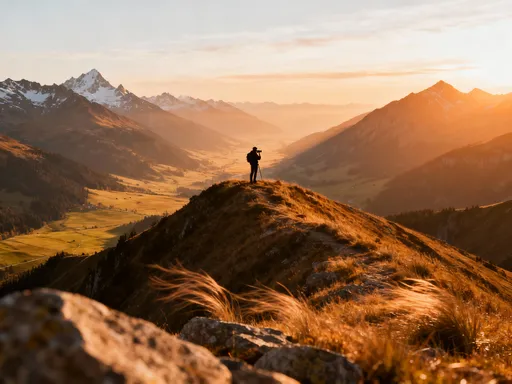
One such spot lies along a bend in the road leading to Mines View, where a narrow dirt path leads to a rocky outcrop. From here, there are no railings, no vendors, no crowds—only a sweeping view of the Cordillera range, uninterrupted by structures or noise. On a clear morning, the sunlight catches the dew on the grass, making the entire slope sparkle. Birds glide on thermal currents, their shadows flickering across the earth. It’s the kind of place where time feels suspended, where the only urgency is to breathe deeply and stay present.
Another hidden gem is the area near the Teacher’s Camp, where trails wind through pine forests and open into clearings with panoramic views. These paths are used by locals for morning walks and quiet reflection, and visitors who approach with respect are often welcomed with a nod or a soft greeting. The key to finding these places is not a map, but mindfulness. They reveal themselves to those who are not rushing, who pause to look beyond the obvious, and who understand that the best views are often the ones that find you, not the ones you chase. These moments of surprise and solitude are not accidents—they are rewards for choosing presence over perfection, for valuing experience over expectation.
How to Experience Baguio’s Views Like a Local
To truly appreciate Baguio’s vistas, timing and preparation matter. The best light for viewing occurs during two golden windows: early morning, just after sunrise, when the mist is thickest and the air is clearest, and late afternoon, when the sun casts long shadows and paints the mountains in warm tones. Weekdays offer more solitude than weekends, when families and tour groups fill the popular spots. Travelers who rise early are often rewarded with near-empty viewpoints and a sense of quiet ownership over the landscape.
Dressing in layers is essential. Mornings can be near-chilly, especially at higher elevations, while midday brings mild warmth. A light jacket, scarf, and comfortable walking shoes make all the difference. While ride-sharing apps and taxis provide convenient access to major sites, walking—or hiring a tricycle for short hops—allows for spontaneous discoveries. Locals often combine sightseeing with small pleasures: a cup of coffee at a view-facing café, a stop at a roadside stall for warm bibingka (rice cake), or a brief detour to a quiet garden or church courtyard.
Patience is perhaps the most important tool. The best views in Baguio do not always appear on demand. Clouds may obscure the ridges for hours, only to part suddenly, revealing a vista more stunning than expected. Rain may fall in the morning, clearing the air for a brilliant sunset. The city teaches a quiet lesson: beauty reveals itself to those who wait. Rather than rushing from one spot to the next, travelers who linger, observe, and return to the same place at different times often experience the most profound shifts in perspective. The mountain does not perform—it invites. And the invitation is extended not to the hurried, but to the attentive.
Conclusion: More Than a View – A Shift in Mindset
Baguio’s greatest gift is not its scenery, but what that scenery awakens within us. Repeated exposure to its elevated landscapes does more than please the eye—it recalibrates the mind. The distance from urban chaos creates space for reflection. The crisp air clears not just the atmosphere, but the mental fog that accumulates in daily life. In the stillness of a sunrise over the Cordillera, or the quiet of a hidden ridge, something shifts. It’s not a dramatic revelation, but a subtle realignment—a reminder that life does not have to move at full speed to have meaning.
The views here are not just to be seen, but to be felt. They invite a slower rhythm, a deeper breath, a renewed sense of wonder. They remind us that beauty is not always loud or flashy; sometimes, it is the soft glow of sunset on pine trees, the sound of wind through the branches, or the warmth of a stranger’s smile at a quiet lookout. In a world that often measures value by productivity, Baguio offers a different metric: presence.
True discovery, then, is not about ticking off landmarks or capturing the perfect photo. It is about allowing oneself to be changed—by a moment, a view, a breath of mountain air. It is about understanding that elevation is not just a physical state, but an emotional one. And for those willing to make the journey, the mountains are always ready to speak. You need only climb, pause, and listen.