Pompeii Unfiltered: Where Ancient Echoes Meet Modern Magic
You know that feeling when history doesn’t just whisper—but screams with color, texture, and soul? Walking through Pompeii, I didn’t expect to be so moved. It’s not just ruins—it’s a living stage where every stone tells a story. With cultural events breathing new life into ancient streets, this isn’t your textbook visit. Think gladiator reenactments under the sun, frescoes glowing at dusk, and music echoing through 2,000-year-old theaters. This is travel with depth—and serious Instagram glow-up potential.
First Encounter: Stepping Into a Time Capsule
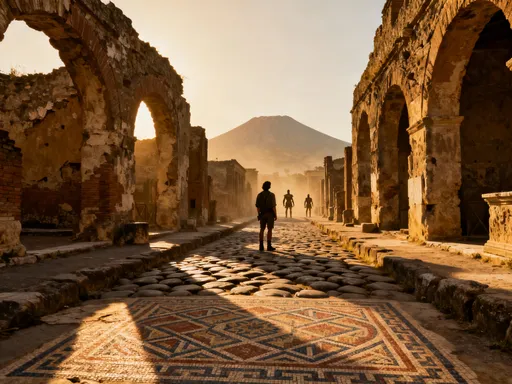
The moment you pass through the Porta Marina gate, Pompeii unfolds like a city caught mid-breath. Cobblestone streets, worn smooth by centuries of cart wheels and sandals, stretch in deliberate Roman geometry. Houses with intact rooftrees rise on either side, their atriums open to the sky, their walls still painted in ochres, reds, and deep blues. This isn’t a reconstruction—it’s the real thing. Buried in 79 AD by the catastrophic eruption of Mount Vesuvius, the city was preserved beneath layers of volcanic ash, freezing daily life in astonishing detail. You don’t just see history here; you walk through it, breathe it, feel its pulse beneath your feet.
What strikes most visitors is the absence of modern intrusion. No power lines, no billboards, no neon signs. Just stone, sunlight, and silence—broken only by the occasional guide’s voice or a child’s laugh echoing down the decumanus. The Forum, once the civic and religious heart of the city, remains an open plaza ringed by weathered columns and temples. Nearby, the Basilica stands with its tiered seating still intact, a reminder of legal proceedings and public discourse that once animated these spaces. Even the floor mosaics—like the famous ‘Cave Canem’ (Beware of the Dog) at the House of the Tragic Poet—retain their vividness, their tesserae shimmering as if laid yesterday.
There’s an emotional weight to this preservation. In the House of the Faun, one of the largest private residences ever unearthed, you can trace the path of a wealthy Roman family through grand peristyles and intricate fountains. The Alexander Mosaic, now housed in Naples but originally from this villa, once covered an entire reception floor, depicting battle in breathtaking detail. Walking through such spaces, you’re not just observing architecture—you’re stepping into the lives of people who dined, argued, loved, and dreamed in these very rooms. That intimacy, that unbroken thread between then and now, is what makes Pompeii unlike any other archaeological site on Earth.
The Pulse of Culture: Reviving an Ancient City
For decades, Pompeii was treated as a static monument—something to be studied, preserved, and viewed from a distance. But in recent years, a cultural renaissance has transformed the ruins into a living venue for performance, music, and storytelling. Officially sanctioned by the Archaeological Park of Pompeii, a growing calendar of events now brings the ancient city back to life in ways that honor its past while engaging modern audiences. These aren’t gimmicks or tourist traps—they’re carefully curated experiences that align with historical authenticity and artistic excellence.
Each summer, the Great Theater—carved into the hillside and seating up to 5,000—hosts classical music concerts under the stars. Imagine the opening notes of Vivaldi’s ‘Four Seasons’ resonating through the same acoustics that once carried Roman comedies and tragedies. The sound doesn’t just fill the space; it seems to awaken it. In collaboration with institutions like the Teatro di San Carlo in Naples, these performances draw world-class musicians and audiences from across Europe. Similarly, theatrical productions of Greek and Roman plays are staged in the Small Theater, where actors in period-inspired costumes deliver lines in Latin and Italian, their voices rising and falling in rhythms that feel startlingly familiar.
For those seeking a more immersive experience, historical reenactments offer a glimpse into daily life. On select weekends, costumed interpreters portray bakers, merchants, and soldiers, demonstrating ancient crafts like bread-making with volcanic stone ovens or the use of Roman military equipment. Children can try writing on wax tablets with styluses, while adults listen to lectures on Roman law or domestic rituals. These programs, often organized in partnership with Italian universities and cultural foundations, ensure accuracy and depth. They don’t pretend to recreate the past perfectly—but they do make it tangible, immediate, and deeply human.
Seasonal festivals further enrich the cultural calendar. During the spring, the ‘Ludi Pompeiani’ celebrates Roman games with mock gladiator duels, chariot processions, and traditional feasting. These events are not only entertaining but educational, offering context about Roman values, religion, and social hierarchy. The amphitheater, one of the oldest surviving Roman stadiums, becomes the centerpiece, its elliptical arena once the site of real combat now repurposed for dramatic, bloodless spectacles. These events draw families, scholars, and curious travelers alike, proving that heritage doesn’t have to be silent to be respected.
Framing the Past: Why Pompeii Is a Photographer’s Dream
If you’ve ever wanted to capture time itself, Pompeii offers a canvas like no other. The interplay of light, texture, and shadow here is extraordinary—especially during the golden hours just after sunrise and before sunset. At dawn, when the site first opens, soft, angled light spills across the Forum, casting long shadows from the columns and illuminating the weathered facades in warm hues. This is the ideal time for wide-angle shots that emphasize scale and symmetry, capturing the grandeur of the ancient city with minimal human presence.
For intimate detail, focus on the artistry embedded in the ruins. Frescoes—many still clinging to walls in homes like the House of the Vettii—show mythological scenes, lush gardens, and architectural illusions painted with remarkable skill. A macro lens can reveal the brushstrokes, the layering of pigments, even the cracks that tell their own story of survival. Similarly, mosaics on the ground invite low-angle photography, where the play of light across tiny tesserae creates depth and movement. Try crouching near the entrance of the House of the Faun to photograph the intricate patterns under morning light—the contrast between shadow and brightness adds drama without digital enhancement.
Rain can be a gift, not a setback. After a light shower, the volcanic stone glistens, reflecting the sky and turning the streets into mirrors. Puddles capture inverted images of columns and archways, offering surreal compositions. The amphitheater, with its concentric tiers, becomes especially photogenic when wet—the dark stone enhances the texture, and the symmetry of the structure feels almost otherworldly. A polarizing filter can help manage glare while deepening the colors of painted walls and the surrounding greenery.
But perhaps the most dynamic opportunities come during live events. A violinist performing in the Small Theater creates a powerful juxtaposition—modern music in an ancient setting. Capture the musician mid-note, the audience silhouetted against the fading light, the acoustics almost visible in the stillness. Or photograph a reenactor in full gladiator gear standing at the edge of the arena, the Vesuvius crater visible in the distance. These moments blend time, culture, and emotion in a single frame. You don’t need professional gear to tell a story—just awareness, patience, and respect for the space.
Beyond the Forum: Hidden Corners with Cultural Flair
While the Forum and amphitheater draw the crowds, some of the most meaningful experiences in Pompeii happen off the beaten path. The Villa of the Mysteries, located just outside the main city walls, is one such gem. Famous for its enigmatic fresco cycle believed to depict a Dionysian initiation ritual, this villa exudes a quiet, almost sacred atmosphere. Unlike the busier central sites, it often sees fewer visitors, allowing for contemplative exploration. The room with the red-painted walls and flowing figures feels like a private sanctuary—perfect for quiet reflection or unhurried photography.
What many don’t realize is that this villa also hosts intimate cultural events. Small chamber music performances are occasionally held here during the spring and autumn, where a string quartet plays beneath the ancient ceiling, their music weaving through the same space where rituals once unfolded. These events are not widely advertised, often requiring advance registration, but they offer an unparalleled sense of connection between past and present. The acoustics, shaped by centuries of stillness, carry each note with clarity and warmth.
Another overlooked site is the Fullonica of Stephanus, a Roman laundry facility that provides insight into everyday industry. Here, large vats used for cleaning and dyeing textiles still stand, along with workrooms and storage areas. What makes this location special is its use for artisan demonstrations. On certain weekends, local craftspeople show traditional textile techniques—using natural dyes, fulling wool with wooden hammers, and even recreating Roman perfume blends. These hands-on experiences are especially engaging for families and offer a tactile understanding of ancient labor that textbooks can’t convey.
For a truly unique perspective, consider a guided night tour. Offered seasonally, these after-hours visits illuminate the city in dramatic, theatrical lighting. Frescoes glow under soft spotlights, columns cast long shadows, and the air feels cooler, quieter, more mysterious. Some night tours include live narration or short performances—such as a monologue from a Roman matron’s perspective—delivered in hushed tones that heighten the sense of intimacy. Without the daytime bustle, you’re free to wander, pause, and absorb the atmosphere at your own pace. It’s in these quiet moments, under a starlit sky, that Pompeii feels most alive.
Local Rhythms: Culture Before and After the Ruins
The experience of Pompeii doesn’t end at the exit gate. The modern town of Pompei, just a short walk from the archaeological site, offers a living continuation of the region’s cultural identity. This isn’t a generic tourist town—it’s a place where daily life unfolds with a quiet dignity, shaped by centuries of history and faith. The Basilica of Santa Maria del Rosario, near the train station, stands as a testament to spiritual devotion, its interior adorned with votive offerings and mosaics that echo the artistry of antiquity.
But the true heartbeat of the town lies in its small cafés, family-run trattorias, and artisan workshops. In the morning, locals gather at Bar Nocera for espresso and sfogliatella, the flaky Neapolitan pastry that melts on the tongue. The scent of roasted coffee and warm pastry mingles with the sea breeze, creating a sensory welcome. At lunch, trattorias like Il Lupanare (named after an ancient establishment, though serving only food today) offer Campanian specialties—spaghetti alle vongole, slow-cooked ragù, and fried zucchini blossoms—using ingredients sourced from nearby farms and the Bay of Naples.
Artisans keep ancient motifs alive in contemporary forms. In a small shop near Piazza Esedra, a ceramicist paints plates and tiles with Roman-style patterns—laurel wreaths, mythological creatures, geometric borders—using techniques passed down through generations. Another studio transforms volcanic ash from Vesuvius into jewelry, embedding it in resin to create pendants and earrings that carry a literal piece of history. Street art, too, pays homage to the past: murals near the train station depict Roman gods alongside modern figures, blending myth and memory in vibrant color.
These local expressions remind us that culture isn’t confined to ruins. It lives in the way people eat, create, and gather. By spending time in the town, visitors gain a fuller understanding of how the past informs the present—not as a museum exhibit, but as a living tradition. A coffee shared with a local, a conversation with a craftsman, a plate of fresh pasta—these moments complete the Pompeii experience, grounding it in humanity and warmth.
Smart Visiting: Timing, Tickets, and Avoiding Crowds
To truly appreciate Pompeii’s depth, planning is essential. The site opens daily, but the experience varies dramatically depending on the time of day and year. For the best light and fewest crowds, arrive at opening time—usually 8:30 or 9:00 AM, depending on the season. Mornings are cooler, the light is softer, and the site feels more personal. Avoid weekends and holidays if possible, as these draw large tour groups and school visits. Tuesdays and Wednesdays are typically the quietest.
Tickets can be purchased online through the official Archaeological Park of Pompeii website, which also hosts the full event calendar. A standard ticket grants access to the main site, but special events—such as evening concerts or night tours—require separate reservations and often sell out weeks in advance. Consider a combo ticket that includes entry to Herculaneum, another exceptionally preserved Roman town, for a more comprehensive view of Vesuvius’s impact. Both sites are accessible via the Circumvesuviana train line from Naples, making a day trip seamless.
The official park app is a valuable tool, offering maps, audio guides, and real-time updates on events and closures. It also highlights lesser-known routes and hidden entrances that help you bypass crowded areas. For example, entering through the Porta Marina Sud instead of the main gate near the train station can save time and offer a quieter start. Wear comfortable shoes—Pompeii covers over 170 acres, and much of it is uneven stone. Bring water, sunscreen, and a hat, especially in summer, when temperatures can soar.
Most importantly, check the event schedule before your visit. If you’re drawn to performances, plan your trip around the summer concert series or the spring reenactments. These events transform the atmosphere, adding sound, movement, and energy to the ruins. Even if you don’t attend a formal program, knowing when live activities occur can help you time your visit—perhaps arriving early to photograph an empty theater before a rehearsal begins. With a little preparation, you can move beyond the typical tourist path and engage with Pompeii on a deeper, more personal level.
Why This Journey Matters: Connecting with Humanity Through Time
Traveling to Pompeii is more than a sightseeing excursion—it’s an act of remembrance, a bridge across centuries. In a world that often feels fragmented and fast-moving, this ancient city offers a rare opportunity to slow down and connect with something enduring. The footprints in the volcanic ash, the graffiti on a tavern wall, the outline of a dog preserved in plaster—these are not just relics. They are echoes of real lives, of people who laughed, argued, loved, and worried just as we do today.
What makes modern Pompeii so powerful is the way it honors that humanity. By hosting music, theater, and cultural events within the ruins, we’re not desecrating the past—we’re continuing it. We’re saying that art, expression, and community matter, then and now. A violinist playing in the Great Theater isn’t erasing history; she’s adding her voice to its chorus. A child tasting ancient bread at a reenactment isn’t pretending—he’s learning through experience. These moments of engagement transform passive observation into active participation.
And for the traveler, especially one seeking meaning beyond the surface, Pompeii offers a quiet revelation: that beauty and sorrow, life and loss, are woven together in the fabric of time. To walk these streets is to witness both destruction and survival, silence and song. It’s a reminder that culture isn’t something we inherit and preserve in glass cases—it’s something we carry forward, reinterpret, and keep alive.
So when you visit Pompeii, don’t just take photos—feel them. Don’t just listen to the guide—listen to the stones. Let the weight of history settle in your chest, and let the modern performances lift your spirit. Travel with intention. Capture with care. And above all, allow yourself to be moved. Because in this place, where ancient echoes meet modern magic, you’re not just witnessing history—you’re becoming part of it.