Sunset Drinks, Salt-Weathered Benches, and the Quiet Corners of Zakynthos That Stole My Heart
You know that feeling when a place just gets you? Zakynthos wasn’t on my radar, but slowing down here changed everything. No rush, no crowds—just sun-bleached harbors, olive-shaded squares, and cafés where time melts like honey. This is slow travel at its purest: sipping coffee while fishermen mend nets, wandering lanes with no map, finding joy in stillness. If you’re craving travel that feels real, not rehearsed, let me show you the quieter side of this island. Here, the rhythm isn’t dictated by tour buses or packed itineraries, but by the tides, the heat of the afternoon sun, and the quiet rituals of island life. This is a journey not of miles covered, but of moments held.
The Rhythm of Zakynthos: Why Slowing Down Reveals More
Zakynthos, often spotlighted for its turquoise waters and vibrant nightlife, holds a deeper truth beneath the surface—one that reveals itself only to those who pause. While many travelers rush to Navagio Beach or the bustling streets of Laganas, the island’s soul resides in its unhurried tempo. Life here unfolds in the soft morning light, when the first baker pulls warm loaves from the oven, and in the golden hours before dusk, when the sea calms and neighbors gather without agenda. This rhythm isn’t accidental; it’s woven into the island’s identity, shaped by generations who measure time not by clocks, but by sunlight and tide.
Slow travel in Zakynthos isn’t a trend—it’s the natural way of being. In villages like Volimes and Keri, the day begins with the clink of coffee cups on marble tables and the low hum of conversation. There’s no rush to “do” anything. A morning might consist of buying bread, sitting on a shaded bench, and watching the world stir. This pace allows space for observation, for connection, for noticing the way light filters through bougainvillea or how a fisherman’s hands move with practiced ease over his net. These moments, seemingly insignificant, form the fabric of authentic experience.
Contrast this with the typical tourist rhythm—early starts, packed ferries, crowded viewpoints—and the difference becomes clear. The hurried traveler sees the island as a checklist: swim here, eat there, photograph that. But the one who slows down sees Zakynthos as a living, breathing community. They witness the morning market in Argassi, where locals barter for tomatoes still warm from the sun. They linger outside a kafeneio in Exo Chora, where old men debate politics over backgammon and strong coffee. These aren’t staged performances; they’re daily life. And by aligning with this rhythm, visitors don’t just observe—they belong, even if just for a few days.
The island’s geography supports this pace. Nestled in the Ionian Sea, Zakynthos is large enough to offer variety, yet small enough that distances feel manageable. You can drive from the southern cliffs to the northern olive groves in under an hour, but the real journey is internal. It’s about shifting expectations—from seeing as much as possible to feeling as deeply as possible. When you let go of the need to “cover” the island, you open yourself to its quiet revelations: the scent of thyme on a hillside breeze, the sound of goat bells in a distant valley, the warmth of a stranger’s smile when you say “kalimera” with effort and sincerity.
Charming Harbors: Where Time Floats with the Boats
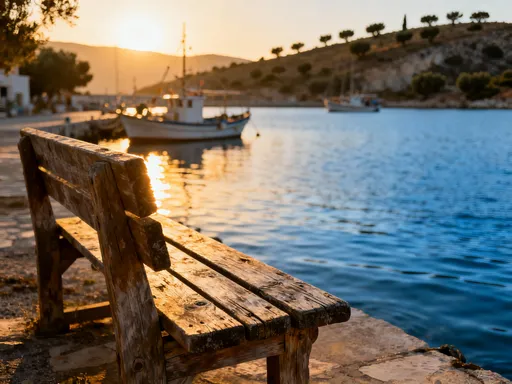
While Zakynthos’ famous beaches draw the crowds, its smaller harbors offer a different kind of magic—one defined by stillness and authenticity. These are not postcard-perfect marinas filled with yachts, but working ports where fishing boats return with the day’s catch and tavernas serve food straight from the sea. Agios Nikolaos, tucked into the island’s northeastern edge, is one such haven. Here, the harbor curves like a cradle, sheltering wooden boats painted in faded blues and greens. Benches line the waterfront, facing west—perfect for watching the sun dip below the horizon, painting the sky in molten gold and soft lavender.
Spend an afternoon in Agios Nikolaos, and time seems to stretch. There’s no Wi-Fi signal strong enough to pull you back into the digital world, no loud music competing with the natural soundtrack of lapping waves and creaking hulls. Instead, you might sit with a glass of local wine, listening to the rhythmic tap of a fisherman’s tool as he repairs his boat. Or you might wander into a family-run taverna where the owner, a woman with sun-creased eyes, brings you a plate of grilled octopus “because you look like you need something real.” These moments aren’t curated for tourists; they happen because this is how life unfolds here.
Keri, on the southern coast, offers a similar serenity. Its small harbor is flanked by low stone buildings, their shutters painted in earthy ochres and whites. Fishing nets hang to dry like tapestries, their patterns intricate and weathered. At dusk, the air fills with the scent of garlic and olive oil as kitchens come alive. Locals gather on benches, speaking in low tones, their laughter soft and unhurried. There’s no pressure to order another drink or make room for the next guest. You can stay as long as you like, letting the cool evening breeze lift the day’s heat from your skin.
What makes these harbors special is their authenticity. They are not designed for Instagram moments, but for living. Children play near the water’s edge, dogs nap in the shade, and cats weave between tables in search of scraps. The rhythm is set by the sea, not by business hours. Boats leave at dawn and return when the catch is good. Meals are served when they’re ready, not when the reservation says so. In this environment, relaxation isn’t forced—it’s earned through presence. You don’t need to “do” anything to enjoy these places. Simply being there, absorbing the atmosphere, is enough.
Village Squares: The Pulse of Daily Life
If the harbors are Zakynthos’ quiet heartbeats, then the village squares are its steady pulse. These shaded plazas, often centered around a small church or a centuries-old plane tree, are where community life unfolds in its most natural form. In Volimes, the square is lined with kafeneia where men in white shirts and flat caps gather each afternoon. They play backgammon with deliberate focus, their hands moving the pieces with the ease of long practice. Women sit nearby, knitting or chatting, their voices rising and falling like a familiar melody. The air carries the scent of jasmine and strong coffee, a combination that feels both comforting and invigorating.
These squares are not attractions. They are not maintained for tourists. They exist because people need places to meet, to rest, to connect. And yet, they welcome visitors who approach with respect and quiet curiosity. Sitting at a corner table with a frappé, nodding hello to those who pass by, and staying long enough to finish your drink without rushing—these small acts signal that you’re not just passing through. You’re making space to be part of the moment, even if only as a quiet observer.
In Anafonitria, the square is smaller, nestled high in the hills with panoramic views of the island’s green interior. Here, the pace is even slower. After Sunday mass, families gather under the trees, sharing sweets and stories. A priest in black robes walks slowly to his home, exchanging greetings with everyone he meets. Children chase each other between benches, their laughter echoing off the stone walls. There’s no agenda, no schedule—just the simple pleasure of being together. This is where slow travel finds its deepest resonance. It’s not about seeing a new place every hour, but about sharing in the rhythm of a community, even if only for an afternoon.
Kampi, another inland village, offers a similar experience. Its square is shaded by a massive plane tree, its branches spreading like a canopy. In the heat of the day, the bench beneath it is the most sought-after seat. Locals know this, and they make room. A nod, a smile, a gesture to sit down—these small acts of kindness are part of the island’s unspoken code. You don’t need to speak fluent Greek to belong here. You just need to be present, to move at the same pace, to let the stillness settle into your bones. In these squares, time isn’t measured in minutes, but in shared silences, in cups of coffee finished slowly, in the way the light shifts across the cobblestones as the afternoon deepens.
Olive Groves and Hidden Benches: Nature Designed for Stillness
Beyond the coastline, Zakynthos reveals another layer—its inland landscape of rolling hills, terraced farms, and ancient olive groves. These are not manicured parks or marked hiking trails, but wild, untamed spaces where nature moves at its own pace. Winding dirt paths, barely wide enough for a single car, lead to secluded clearings where stone benches sit beneath gnarled olive trees. These benches, often placed by locals generations ago, face the sea or a distant valley, inviting contemplation. They are not listed on maps, nor are they part of any tour. They exist simply because someone once thought, “This is a good place to sit.”
Walking through these groves is an act of surrender. There’s no destination, no endpoint. You follow the path because it’s there, because the shade feels good, because the sound of cicadas fills the air like a natural lullaby. The trees, some over a hundred years old, stand like silent guardians, their silver-green leaves shimmering in the breeze. The ground is dusty, scattered with fallen olives and wild thyme. Every few steps, you might catch a glimpse of the sea between the trunks—a flash of blue that pulls your gaze forward, then disappears again.
These walks aren’t about fitness or achievement. They’re about presence. They’re about stopping to touch the rough bark of an old tree, about sitting on a bench and letting your thoughts drift like clouds. In a world that glorifies busyness, Zakynthos’ olive groves offer a different model—one where value is found not in doing, but in being. You don’t need special gear or a guide. Just comfortable shoes, a bottle of water, and the willingness to move slowly. Let the path unfold as it will. Turn back when you’re tired. Sit when you’re not. There’s no wrong way to do this.
Some of the most peaceful moments come when you find one of these hidden benches and realize you’re completely alone. No voices, no traffic, no notifications—just the wind, the cicadas, and the distant cry of a bird. In that stillness, something shifts. The noise of daily life—the to-do lists, the worries, the endless scrolling—begins to fade. You remember what it feels like to just exist, to breathe deeply, to notice the way sunlight filters through leaves. These moments don’t happen because you planned them. They happen because you allowed them to.
Cafés with Character: More Than Just a Coffee Stop
In Zakynthos, a café is more than a place to buy a drink—it’s a social institution, a third space between home and work where life unfolds at a human pace. The best ones aren’t found in guidebooks, but through wandering. They’re the family-run kafeneia in sleepy villages, where the owner knows your order after two visits, or the seaside bars with mismatched chairs and no menu, where you point to what looks good and trust the chef’s instinct.
One such place is a small kafeneio in Exo Chora, tucked behind the church. The owner, a woman named Eleni, has run it for over thirty years. She greets regulars by name and brings newcomers a slice of watermelon “just because it’s hot.” There’s no music, no TV, no Wi-Fi sign. The only sounds are the clink of spoons in glasses, the murmur of conversation, and the occasional bark from a dog outside. You can sit for hours with a single frappé, and no one will rush you. In fact, Eleni might bring you a second one, “on the house,” because she appreciates that you’re not in a hurry.
These cafés reward lingering. They’re designed for conversation, for reading, for watching the world go by. The seating is often simple—wooden chairs, marble tables, shade from an awning or a vine-covered pergola. The menu is short: strong coffee, cold drinks, maybe a slice of homemade pie. But the experience is rich. It’s in the way the owner remembers how you take your coffee, in the way locals nod hello as they pass, in the way time seems to slow the moment you sit down.
To blend in, follow a few quiet rules. Arrive mid-morning or late afternoon, when the heat has eased. Order something simple—coffee, lemonade, a local beer. Sit outside if possible. Signal that you’re not in a rush by leaving your bag on the chair, by reading a book, by finishing your drink slowly. Don’t check your phone constantly. Instead, look around. Smile at passersby. If someone says “kalimera,” say it back. These small gestures show respect, and they open doors to connection. You might end up sharing a table with a local who offers to show you a hidden path, or an elderly man who tells you stories of the island’s past. These moments don’t happen in crowded resorts. They happen in places where time is valued more than turnover.
Choosing the Right Base: Villages Over Resorts
To truly experience Zakynthos at a slow pace, where you stay matters as much as what you do. While resorts in Laganas or Tsilivi offer convenience and amenities, they often isolate travelers from the island’s authentic rhythm. Staying in a village—such as Exo Chora, Volimes, or Keri—places you at the heart of daily life. You wake to the sound of church bells, shop at family-run bakeries, and dine at tavernas where the owner greets you like family.
Villages offer practical advantages. They’re quieter, cooler, and closer to local markets. You can walk to breakfast, buy fresh produce for a simple lunch, and return to your guesthouse for an afternoon nap. There are no loud clubs or packed beaches nearby—just peace, shade, and the occasional goat on the road. Accommodations in these areas are often family-run guesthouses or self-catering studios, designed to feel like home. They may not have pools or spas, but they offer something more valuable: a sense of belonging.
Staying in a village also supports the local economy in a meaningful way. Your breakfast at the corner kafeneio goes directly to the family who runs it. Your evening meal supports a fisherman’s livelihood. Your presence, as a respectful guest, reinforces the value of preserving these quiet corners of the island. This kind of travel isn’t extractive—it’s reciprocal. You take memories, and you leave behind appreciation and economic support.
For those concerned about convenience, rest assured that villages are well-connected. Rental cars are easy to arrange, and roads, while narrow, are passable. The journey from Exo Chora to the southern beaches takes less than thirty minutes. But the real benefit is intangible: the feeling of being part of something real, not staged. When you return to your village in the evening, you’re not retreating from the island—you’re returning to it.
A Day in the Life: Putting Slow Travel Into Practice
Imagine waking without an alarm. The sun filters through white curtains, and the only sound is a distant rooster and the rustle of leaves. You step onto your balcony and breathe in the cool morning air, scented with herbs and earth. Breakfast is a short walk away—a small bakery in the village square where the woman behind the counter hands you a warm spanakopita and a coffee in a thick glass. “Enjoy,” she says with a smile. There’s no rush. You sit at a marble table under a vine-covered pergola, watching neighbors greet each other by name.
After breakfast, you set out on foot, not with a map, but with a sense of curiosity. The path leads through orchards of lemon and olive trees, their fruit glistening with dew. You pause to touch the rough bark of an ancient fig tree, to listen to the hum of bees in a wildflower patch. There’s no destination. You turn back when you’re ready, stopping at a kafeneio for a cold drink and a game of backgammon with a local who teaches you the moves with patience and humor.
Lunch is at a small harbor taverna in Keri. The owner, a fisherman’s wife, brings you grilled sardines, a tomato salad drizzled with local olive oil, and a glass of white wine from a nearby vineyard. You eat slowly, watching boats bob on the water. Afterward, you return to your guesthouse for a nap, the fan turning lazily overhead, the sound of cicadas lulling you to sleep.
In the late afternoon, you drive to a quiet cove—no name, no facilities, just a strip of sand and clear water. You swim, float on your back, and let the sun warm your face. As dusk approaches, you climb a small hill and sit on a stone bench, watching the sky shift from gold to rose to deep violet. No one else is around. There’s no photo to post, no story to tell—just the moment, pure and unbroken.
This is the rhythm of slow travel in Zakynthos. It’s not about how much you see, but how deeply you feel. It’s about trading productivity for presence, checklists for connection. And in that shift, something profound happens. You remember what it means to be still. You remember that the most meaningful experiences often come not from doing, but from being.
Carrying the Quiet With You
Zakynthos doesn’t shout. It doesn’t need to. Its beauty is in the quiet corners, the unhurried moments, the spaces between words. This island teaches a simple but powerful lesson: that travel doesn’t have to be loud to be meaningful. The real luxury isn’t in how far you go, but in how deeply you arrive. By embracing stillness, by moving at the pace of the place, you connect not just with Zakynthos, but with yourself.
The lessons learned here—the value of presence, the beauty of simplicity, the power of quiet connection—don’t have to end when your trip does. They can travel with you, shaping how you move through the world. You might start your day with a slower breakfast, savoring your coffee instead of rushing through it. You might take a different route to work, one that passes through a park or along a river. You might learn to say “no” to the constant demand for more, and instead say “yes” to moments of stillness.
Zakynthos reminds us that the most unforgettable journeys aren’t always the ones filled with action. Sometimes, the most transformative trips are the ones where nothing dramatic happens—where you simply sit on a bench, watch the sea, and let the world be. In those moments, everything changes. Because when you slow down, you begin to see—not just the place, but the possibility of a different way to live. And that, perhaps, is the greatest gift any destination can offer.